The Information Gap: Why Some Stories Keep Us Guessing
The information gap in film storytelling helps writers choose between curiosity, suspense and dramatic irony by controlling what viewers know and when.
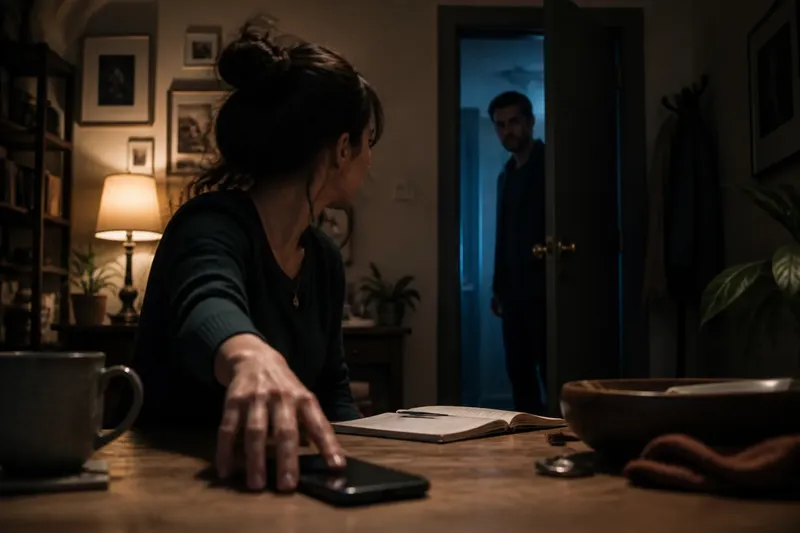
A character reaches for a phone while a second figure watches from the half-open doorway. The film withholds the screen; the viewer sees the watcher. In that brief gap between what the character knows and what the audience can infer, the scene begins to pull in several directions. The information gap is not simply a hidden fact. It is the difference between what a viewer knows and what a character knows, shaped to make the next moment matter.
For a writer, the useful question is not whether to reveal a secret, but whose uncertainty should drive the scene. If the character and viewer are both missing the same information, curiosity may take hold. If the viewer knows a danger the character does not, suspense can build. If the character knows more than the viewer, the gap can create suspicion or intrigue. Choose according to the experience the scene needs, not by reflexively concealing everything.
What kind of uncertainty should the scene create?
Start with the emotional position you want the audience to occupy. The same withheld detail can make a scene feel like a puzzle, a warning or a social encounter full of unreadable motives. These effects overlap, but they are not interchangeable.
- Choose curiosity when the viewer should want an answer. A character discovers an unfamiliar name in a letter, and the audience wants to learn who it belongs to.
- Choose suspense when the viewer should anticipate an outcome and worry about it. The audience sees a hazard approaching while the character carries on unaware.
- Choose dramatic irony when the viewer should understand a situation differently from the character. A character trusts someone whose betrayal the audience has already witnessed.
- Choose ambiguity when uncertainty itself is the point. A character’s pause may signal fear, calculation or grief, and the film does not settle on one reading.
Curiosity asks, “What is this?” Suspense asks, “What will happen before the character understands?” Dramatic irony asks, “What will the character do with a truth the viewer already has?” Ambiguity asks the viewer to remain with more than one plausible interpretation.
Pick the question that best matches the scene’s dramatic pressure. If no one is waiting for an answer, the withheld information may not be doing useful work.
What does the character know compared with the viewer?
Draw a simple knowledge map for the moment. It need not be a formal chart: write down what the character knows, what the viewer knows, and what each is guessing. Then decide which difference matters. A film can give the audience a fact without giving it the meaning, context or emotional weight the character attaches to it.
When both character and viewer lack the same fact, the story can create a shared investigation. This alignment makes discoveries feel like discoveries rather than answers the audience has been waiting for. It suits scenes where the character’s attention is the viewer’s main route into the story, such as entering a room with an unfamiliar object or meeting someone whose name carries no meaning yet.
When the viewer has a small lead, suspense can gather around the character’s next choice. The lead should be legible enough to matter. A glimpse of a wet footprint outside a locked room gives the audience a reason to worry; a vague, unexplained sound may only make the scene feel arbitrary.
When the character has the lead, the viewer may read behaviour for signs of a private intention. This can make a character seem capable, guarded or unreliable. It can also frustrate if the film hides information that the character would naturally express or act upon merely to preserve a later twist.
How much should the audience be allowed to infer?
Withholding works best when the viewer has something to work with. A look toward the exit, a hand that stops over a familiar object, or a change in the way a character answers can point towards an explanation without confirming it. The evidence should support attention, not demand a single solution too early.
Say a scene follows a caretaker who finds a cup left beside a sealed office door. The caretaker removes it, then quietly places it back when footsteps approach. If the viewer has seen the office remain empty, the gesture may prompt curiosity about who uses the room. If the viewer has already seen someone enter it, the same gesture may prompt suspense about whether that person will be discovered. The action stays the same; the information around it changes the audience’s question.
Make the audience’s inference possible, then let a character’s choice give it consequence. A clue with no bearing on behaviour is decoration. A clue that explains every later action in advance can drain the scene of surprise.
Which storytelling choice fits your situation?
How do I create curiosity without making the plot confusing?
Give the viewer a clear question and enough context to understand why it matters. Withhold the answer, not the basic relationships among the people, places and objects involved.
When should the audience know about danger first?
Let the viewer know first when anticipation is more valuable than surprise. The character’s ordinary actions then become charged by the viewer’s awareness of what may interrupt them.
How can I make a character seem secretive?
Show the character acting on knowledge the viewer lacks, while leaving observable traces of that knowledge. A concealed motive feels intriguing when behaviour has a readable shape, even if its cause remains unknown.
What if I want the ending to stay open to interpretation?
Leave a meaningful cause or motive uncertain, but make the character’s visible choice clear. Viewers can debate what the choice means without wondering what physically happened in the scene.
How do camera, sound and editing shape the gap?
Information is not carried by dialogue alone. Framing determines what can be seen; sound can reveal an event before the image does, or conceal its source; editing decides whether the audience receives a detail before, during or after a character reacts.
A close view of a character’s face may conceal the object they are studying, keeping the viewer close to their response but short of their knowledge. A wider frame may reveal a watcher in the background, granting the audience a lead the character lacks. A cut to that watcher can make the scene feel like suspense; staying on the character may preserve uncertainty about whether anyone is there at all.
Sound has its own point of view. A key turning off-screen can tell the audience that someone is entering, even if the character cannot hear it. If the character reacts to the sound, the viewer may instead be left to work out what was heard. In either case, the timing of the cue decides who gets the information first.
Before explaining a withheld detail in dialogue, consider whether a glance, a pause, a change in room tone or a cut could make the viewer notice the gap. The medium can deliver information quietly, through the order and shape of what it shows.
How can you tell when withholding has gone too far?
A useful gap invites attention. An unfair gap blocks the viewer from understanding a character’s choice after the film has made that choice central. If the audience cannot tell what the character is trying to do, what is at stake, or why a new fact changes the situation, secrecy may have displaced the scene’s basic logic.
Check whether the withheld information belongs naturally to the person who knows it. If a character has a straightforward reason to explain a fact to someone they trust, silence needs to reveal something about the relationship or the character. Otherwise, it can look like the writer is keeping the viewer out for convenience.
Also ask what the reveal changes. A new fact can revise the meaning of an earlier gesture, alter a relationship, or force a fresh decision. If it merely fills a blank without changing what the audience understands, the wait may have been longer than the answer can support.
For the information gap to hold, make the audience’s lack of knowledge part of the scene’s experience. A viewer who is wondering, worrying or judging is still engaged; a viewer who cannot follow the cause of an action has been left without a foothold.
When should the gap close?
Reveal information when the character’s next decision needs it, when the audience’s expectation has reached a useful pressure point, or when a new fact can change the meaning of what came before. These moments do not always coincide. A film can answer one question while opening another, provided the new uncertainty grows from what has already happened.
The information gap is most effective when it changes with the scene. A viewer may begin alongside a character, gain a clue, then discover that the character understood more than either the audience or the camera suggested. Such shifts can renew attention without turning every exchange into a puzzle.
When deciding how a viewer should respond, return to the information gap: who knows what, who is guessing, and which next choice will make that difference matter? The answer is a practical guide to what the scene should reveal, delay or leave unresolved.