Mystery or Thriller? Choosing the Story’s Engine
Mystery or thriller: learn how investigation differs from pressure and pursuit, so you can identify the engine that best drives a film’s scenes.
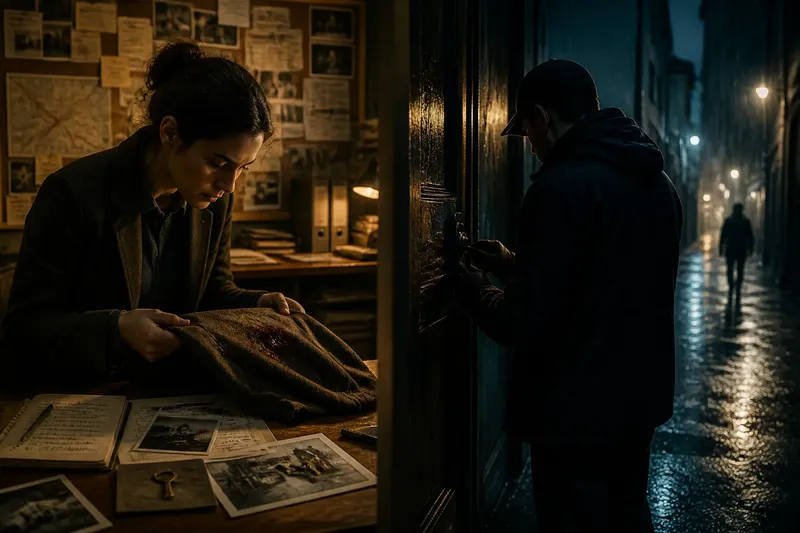
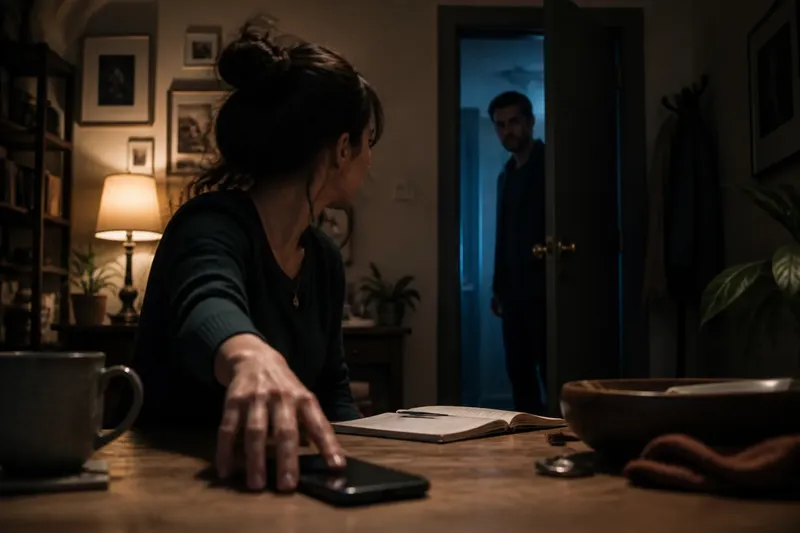
A detective pauses over a damp coat while, across town, someone checks the lock twice. The first image invites a question about the past; the second suggests danger approaching. In a mystery or thriller, that difference is more than mood. It is the story’s engine: the activity that keeps scenes moving and gives the audience a reason to stay alert.
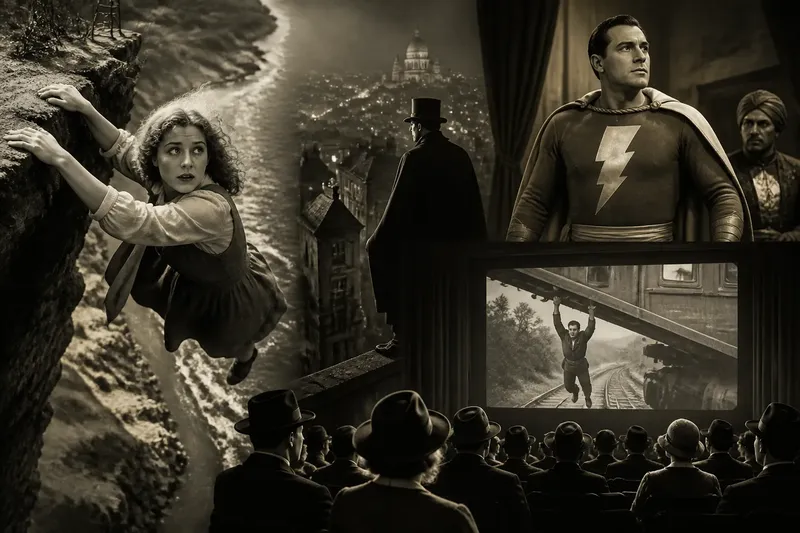
Mysteries are principally driven by investigation. Thrillers are driven by pressure, pursuit or imminent risk. Films often combine both, but one usually sets the dominant rhythm. A writer choosing between them is deciding what the central character must do next, and what kind of suspense each scene should create.
What makes a mystery move?
A mystery begins with an unresolved event or fact. Someone has disappeared, a valuable object is missing, or an apparent accident does not quite make sense. The protagonist’s task is to establish what happened, how it happened, or who was responsible.
That task supplies a sequence of investigative actions: inspect a room, question a witness, compare accounts, follow a lead, revise an assumption. Each action produces information that changes the working picture. A clue matters not simply because it is concealed, but because the investigator can interpret it and decide what to do with it.
The audience’s attention therefore gathers around explanation. Why was the window left open? Which account conflicts with the timetable? What does the missing key connect to? A mystery can contain danger, but its defining forward motion is the effort to make an unclear situation intelligible.
Give the investigator a question that can be pursued through visible actions.
What makes a thriller move?
A thriller’s central problem is pressure. The protagonist may know who is responsible but lack time, safety, or freedom to stop the next move. A pursuer closes in. A witness must be reached before they vanish. A character carrying dangerous evidence has to get through a crowded station without being recognised.
Thriller scenes tend to turn on immediate choices under constraint. Hide or run? Trust the stranger or keep moving alone? Take the exposed route that is fast, or the longer route that offers cover? The audience watches not only for what the character learns, but for whether the character can act before the situation worsens.
Information still matters. A thriller may hinge on a mistaken identity or a concealed motive. But new information chiefly alters the danger, the available options, or the time the protagonist has. The engine remains pressure: the next scene is necessary because the last decision has created another urgent problem.
To check the dominant engine, ask what makes the next scene necessary. If the character needs an answer, investigation is leading. If the character must act before danger catches up, pressure is leading.
How do mystery and thriller differ on screen?
The distinction is easiest to see in the shape of a scene. In a mystery, a conversation may be quiet yet active: the investigator notices a contradiction, tests it with a question, and leaves with a new lead. In a thriller, a similar conversation may be cut short by a call, a pursuer at the door, or a choice that cannot be delayed.
Editing and sound can reinforce either engine. A mystery can hold on a face while an answer is considered, then return to an object whose meaning has changed. A thriller can shorten the space between decisions, use approaching sounds to signal a narrowing escape, or keep the camera close as the protagonist moves through an uncertain place. These are tendencies, not rules; a restrained thriller can build dread slowly, and a mystery can move at a brisk pace.
Genre labels also describe audience expectation, not just subject matter. A murder does not automatically make a film a mystery, and a chase does not by itself make it a thriller. Ask what the protagonist spends most of the film doing. If the work is to reconstruct an event, the story leans towards mystery. If it is to survive or prevent an imminent outcome, it leans towards thriller.
Can one film use both engines?
Yes. Many stories begin by asking who caused a crime, then bring the investigator into direct danger. The investigation supplies the mystery engine; the threat to the investigator supplies the thriller engine. The useful question is not whether a film contains both, but which engine takes control at a given point.
Imagine a fictional film about a night porter who finds an empty room with a bloodied cuff on the floor. For the opening stretch, she compares the room’s key records with staff accounts, and each discrepancy gives her a new lead. When someone begins searching the hotel for her, the next scenes become a thriller: she must decide where to hide and whether to pass her notes to a colleague. The same story has shifted engines because the protagonist’s immediate task has changed.
A shift works best when the new pressure grows from the original investigation. If danger arrives without affecting the question being pursued, it can feel like a separate film temporarily interrupting the first. Let discoveries create consequences: a witness may recognise the investigator, or a lead may reveal that the next target is still in reach.
Which engine fits the story you want to tell?
Start with the protagonist’s verb. “Find out” points towards mystery; “escape”, “stop”, “reach” or “protect” points towards thriller. This is not a naming trick. It helps you see what a scene is for, and whether the character’s next action follows from a question or from pressure.
Then consider where suspense should sit. A mystery asks the audience to compare evidence and anticipate an explanation. A thriller asks them to weigh risk and anticipate an outcome. Both can create uncertainty, but they direct attention differently. A writer who wants the audience to study a changing account may favour investigation; one who wants the audience to feel a closing threat may favour pursuit.
For a blended story, decide when the balance changes and what causes it. Keep the investigative question alive after the danger rises, or the mystery may feel abandoned. Keep pressure attached to choices the protagonist can make, or the thriller may feel like a string of interruptions.
Which engine should a scene serve?
Does a mystery need a detective?
No. The investigator can be a neighbour, a journalist, a relative, or anyone with a reason to resolve the unanswered event. What matters is that the character can pursue evidence and make sense of it.
Can a thriller include clues?
Yes. Clues can change who seems dangerous or reveal what the protagonist must prevent. They serve the thriller engine when they sharpen the immediate threat or alter the character’s choices.
Can a mystery be frightening?
Yes. Fear can make investigation harder and raise the cost of asking questions. The story still leans towards mystery if discovering what happened remains the main work of the protagonist.
How can I tell when a story changes genre?
Look for a change in the protagonist’s immediate task, not merely a change in mood. If interpreting evidence gives way to outrunning a threat, the thriller engine has taken the lead, even if the original question remains unresolved.
For a quick diagnosis of a film or draft, describe the protagonist’s current task in one sentence, then name what prevents it. If the obstacle is uncertainty, the mystery is doing the work; if it is a closing threat or narrowing choice, the thriller is. That small distinction makes “mystery or thriller” a practical question of scene design, not just a label on the poster.